

River Tweed Adventure
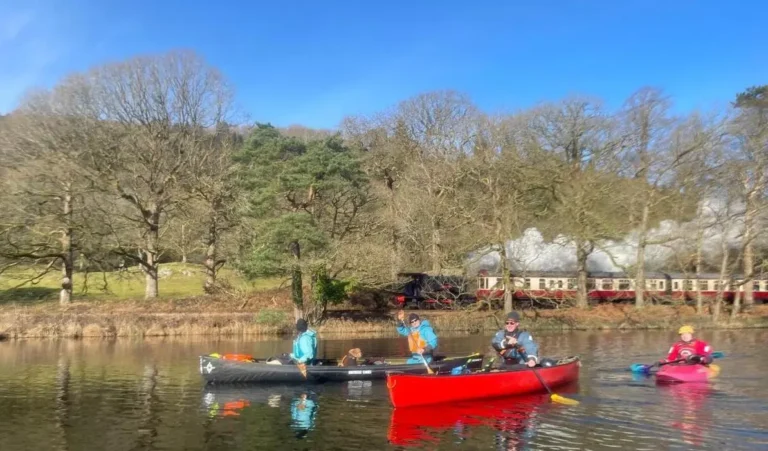
In September 2024, a group of thirteen paddlers from Clitheroe Canoe Club embarked on a fantastic beginner-friendly canoe trip Scotland, exploring the stunning route along the River Tweed. Over two days, the group paddled through breathtaking landscapes, historic landmarks, and gentle rapids, making it a perfect adventure for those new to canoeing.
A River Tweed canoe trip is an excellent choice for paddlers of all levels, offering a mix of calm waters and small rapids, allowing beginners to gain confidence while enjoying a scenic journey. With its historic castles, lush woodlands, and vibrant wildlife, it is a dream location for anyone wanting to experience canoeing in Scotland.
This was Clitheroe Canoe Club’s second River Tweed canoe trip, and it certainly won’t be the last! If you are looking for a friendly and welcoming canoe club, why not join us for another Beginner-Friendly Canoe Trip Scotland? Whether you are a seasoned paddler or just starting out, this trip is a fantastic way to develop skills and enjoy the great outdoors.

Why Choose the River Tweed for Canoeing?
The River Tweed is one of Scotland’s most iconic rivers, flowing 97 miles from the Scottish Borders to the North Sea. It forms part of the Tweed Valley Canoe Trail, a well-known paddling route that offers everything from peaceful flat water to gentle white water sections, making it an ideal location for a Beginner-Friendly Canoe Trip Scotland.
Here’s why the River Tweed canoe trip is perfect for both novice and experienced paddlers:
1. Scenic Beauty & Historic Landmarks
The route takes you past ancient castles, medieval bridges, and historic railway viaducts, providing a fascinating glimpse into Scotland’s past. Highlights include Neidpath Castle, Elibank Castle, and the old Peebles to Symington railway viaduct.
2. Suitable for Beginners
Unlike more challenging rivers, the River Tweed features mostly gentle currents, with small, manageable rapids that add a touch of excitement. This balance makes it perfect for beginners wanting to improve their skills without feeling overwhelmed.
3. Rich Wildlife & Peaceful Surroundings
Paddlers can enjoy tranquil waters, abundant birdlife, and even the occasional otter. The forests and meadows along the riverbanks are home to some of Scotland’s rarest butterflies, including the Small Copper and Northern Brown Argus.
4. A Well-Established Canoe Route
As part of the Tweed Valley Canoe Trail, the route has clear launch and egress points, making trip planning straightforward. There are also plenty of places to stop, take photos, and enjoy the surroundings.
Whether you’re looking for a relaxing river paddle or a chance to develop your canoeing skills, the River Tweed canoe trip is an excellent choice.


Preparing for a River Tweed Canoe Trip
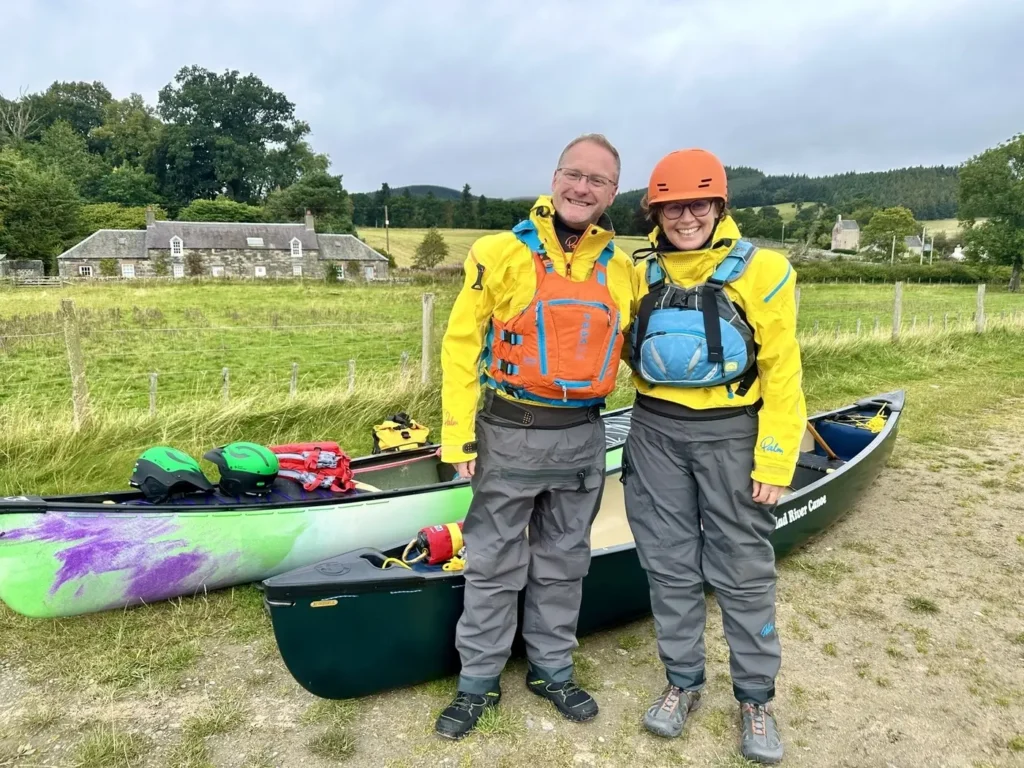
Proper preparation ensures a safe and enjoyable beginner-friendly canoe trip Scotland. Here’s what paddlers need to know before setting off on a River Tweed canoe trip.
Best Time to Canoe on the River Tweed
The best months to paddle the River Tweed are between April and October, when the water levels are more predictable, and the weather is generally mild. September, when Clitheroe Canoe Club made their trip, offered ideal conditions with pleasant temperatures and good water flow.
Choosing the Right Canoe or Kayak
For this trip, the group used a mix of tandem and solo canoes, kayaks, and a sit-on-top kayak. The choice of boat depends on personal preference, but here are some key points:
- Open canoes are ideal for this route, offering stability and space for gear.
- Tandem canoes are great for beginners, allowing shared effort and easier navigation.
- Kayaks (both closed and sit-on-top) provide a more agile experience, especially in choppier sections.

Essential Gear for the Trip
Packing the right equipment is crucial for a safe and comfortable River Tweed canoe trip. Key items include:
✔ Buoyancy aid – Essential for safety, regardless of experience.
✔ Dry bags – To keep belongings protected from water.
✔ Spare clothing & waterproofs – Scottish weather can be unpredictable!
✔ Map or GPS device – Helpful for navigating the Tweed Valley Canoe Trail.
✔ First aid kit – Always good practice for any outdoor adventure.
✔ Snacks & water – Plenty of energy is needed for two days on the water.
With the right preparation, a River Tweed canoe trip becomes an enjoyable and stress-free experience for all skill levels.
Day 1 – Stobo to Peebles
The first day of the journey beginner-friendly canoe trip Scotland began at Stobo, where the group launched their five canoes and two kayaks into the gentle waters of the River Tweed. The conditions were perfect for a beginner-friendly canoe trip Scotland, with the current providing a steady flow while allowing paddlers to soak in the surroundings.
Scenic Highlights Along the Way
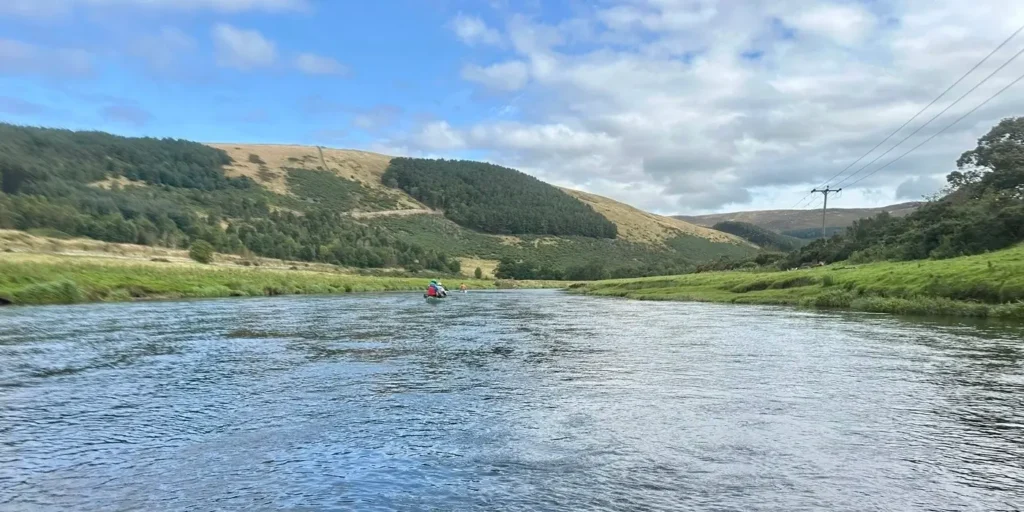
As the group paddled towards Peebles, they passed through the hamlet of Stobo, with the river gradually gaining pace. The only sounds were the rustling trees, birdsong, and the gentle splash of paddles cutting through the water—a truly peaceful experience.
One of the most striking sights was Neidpath Castle, a medieval tower house with an imposing presence over the river. This castle is steeped in history, and legend has it that Sir Walter Scott once swam in the waters below. The paddlers enjoyed a brief break near the castle to stretch their legs and enjoy the sights.
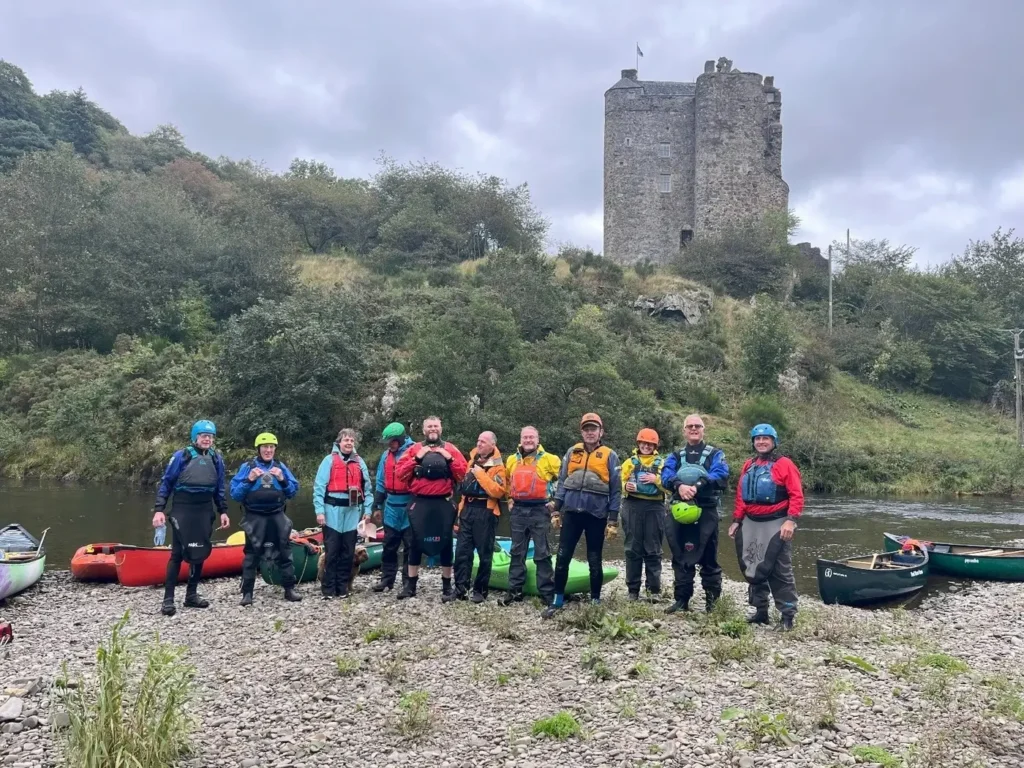
A little further along, the paddlers passed beneath an old disused railway viaduct, a reminder of Scotland’s rich transport heritage. The bridge’s stone arches framed the river beautifully, making it a fantastic spot for a photo break.
A Perfect Riverside Lunch Break
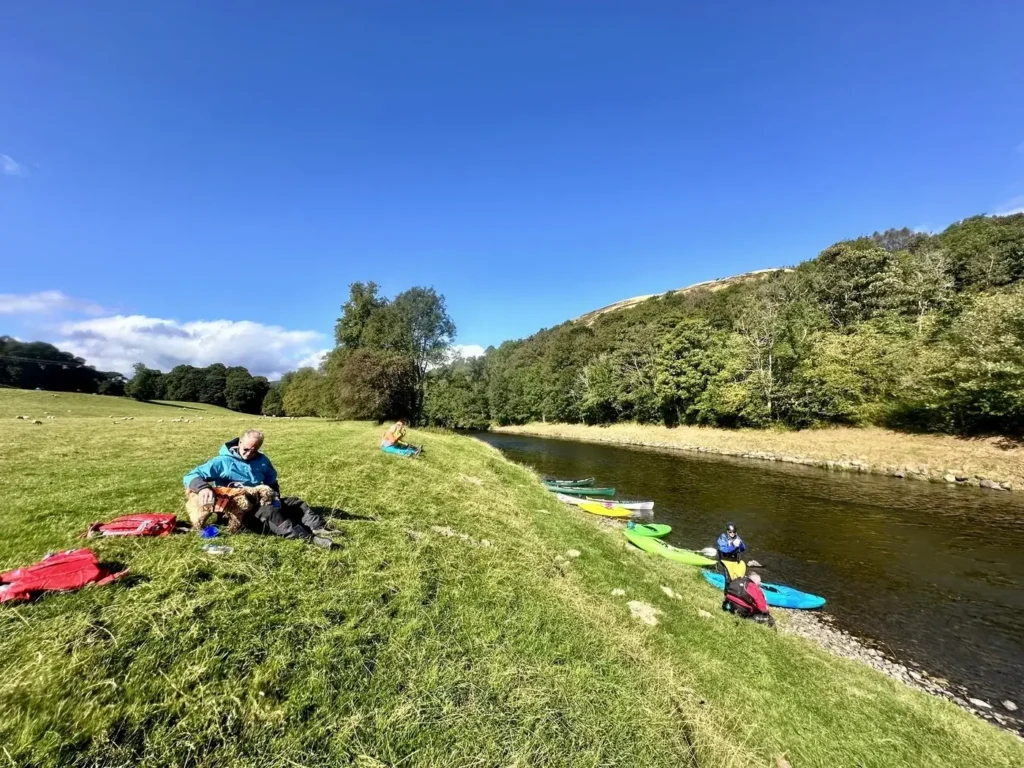
Midway through the first day’s journey, the group spotted a beautiful open field with a small shingle beach, making it the perfect place to stop for a well-earned lunch break. The sky was a brilliant shade of blue, adding to the peaceful atmosphere as sheep grazed quietly nearby.
As the canoes and kayaks were carefully secured, the team spread out across the soft grassy bank, taking time to relax and enjoy the scenery. A wooden swing seat sat invitingly on the bank, likely placed there by the landowner as a peaceful spot to sit and watch the river flow by. Several paddlers took the opportunity to enjoy it, swaying gently as they soaked in the surroundings.
With food unpacked and energy replenished, the group enjoyed the tranquillity of the Tweed, chatting and taking in the picturesque landscape. Feeling refreshed, they eventually climbed back into their boats, ready to continue the journey towards Peebles, where more stunning scenery and an exciting weir awaited.

Navigating the Peebles Cauld
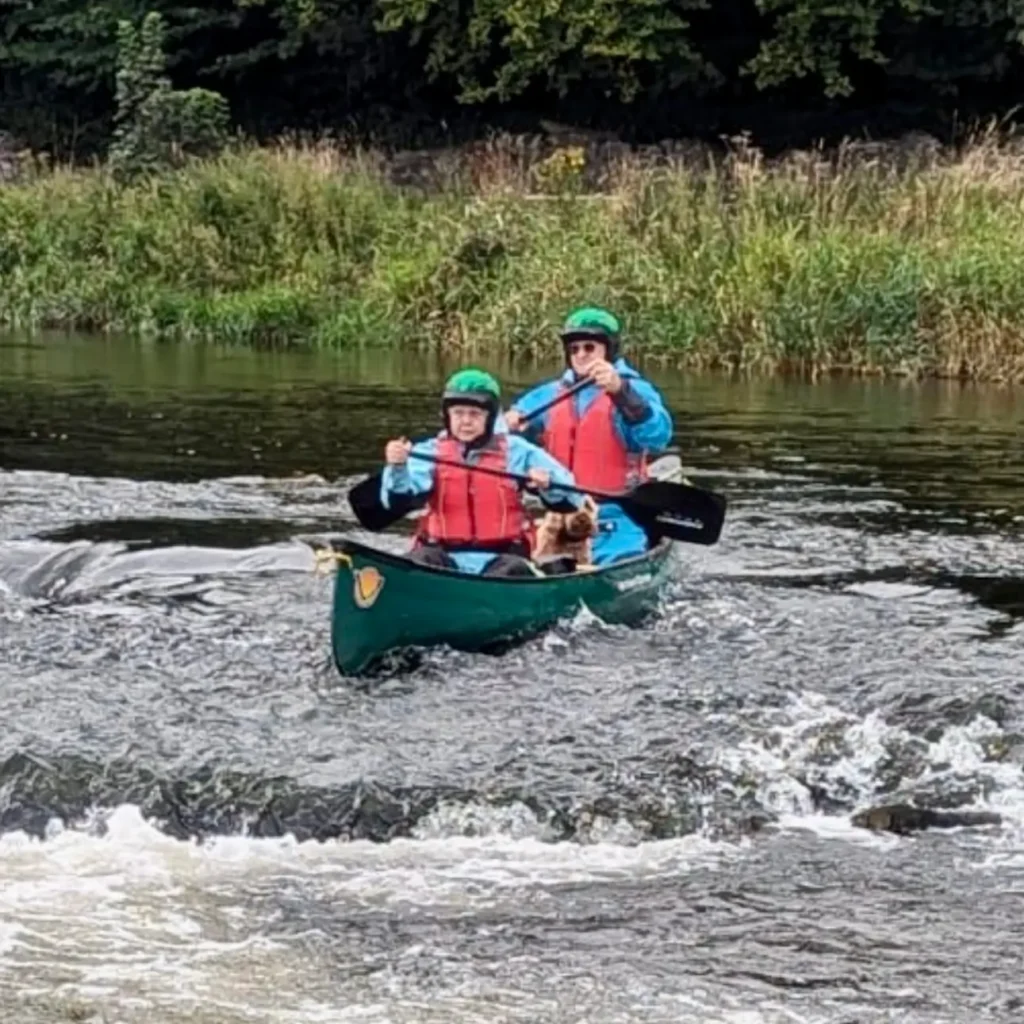
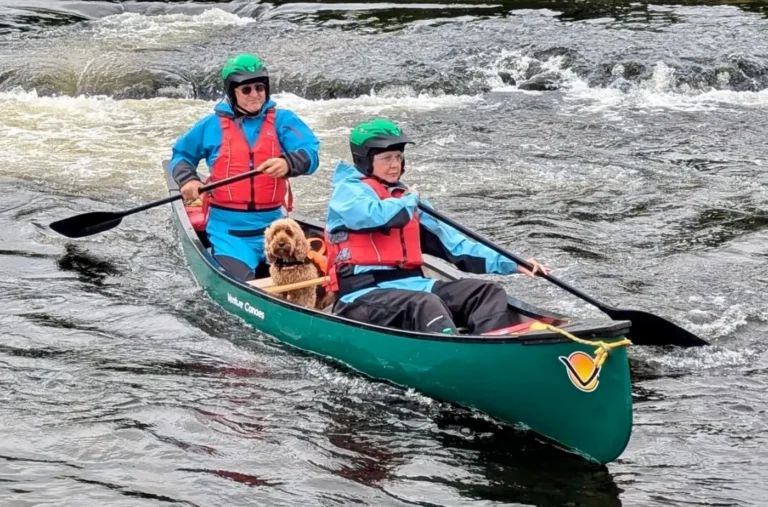
As the group neared Peebles, they encountered their first real challenge—a lively cauld (weir). The best route was through the central channel, steering slightly left to avoid turbulence. Trip leader Tim Hogan went first, landing on a small island to guide the others through. Smiles and cheers filled the air as the group successfully navigated the rapids, staying upright and dry!


Accommodation at Glentress Forest Lodges
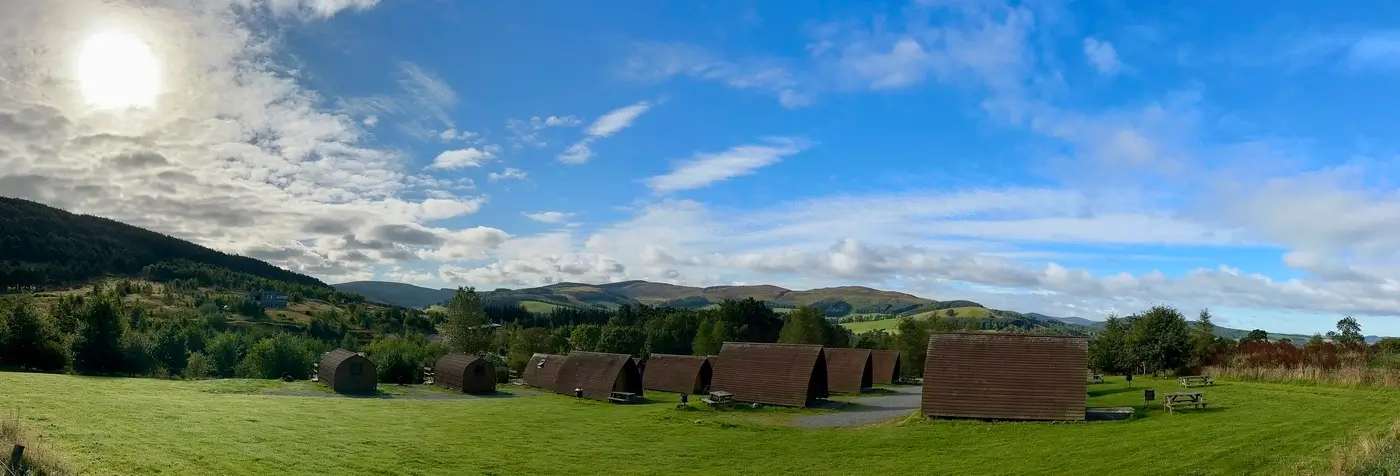
After an enjoyable first day on the water, the group returned to Glentress Forest Lodges, a well-located campsiteoffering easy access to the River Tweed. While the facilities were basic, they provided everything needed for a comfortable stay, allowing the team to rest and recharge before the next day’s paddle.
The site is particularly popular with mountain bikers, thanks to its proximity to Glentress Forest, one of Scotland’s premier mountain biking destinations. Alongside its camping pods, the site also offers touring pitches for caravans and camper vans, as well as three glamping tents for those looking for a little extra comfort.
As the evening set in, the group gathered around a fire, sharing stories from the day’s paddle and looking forward to the next leg of their River Tweed canoe trip. The peaceful surroundings and fresh air made for a relaxing and well-earned rest before another adventure-filled day on the water.

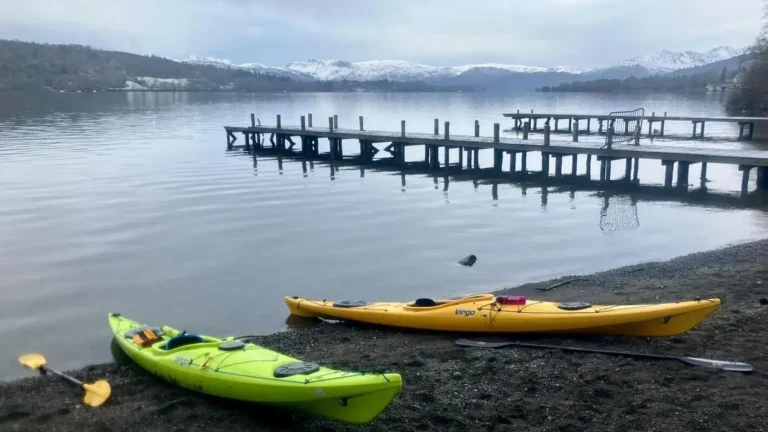
View towards Glentress Forest Lodges 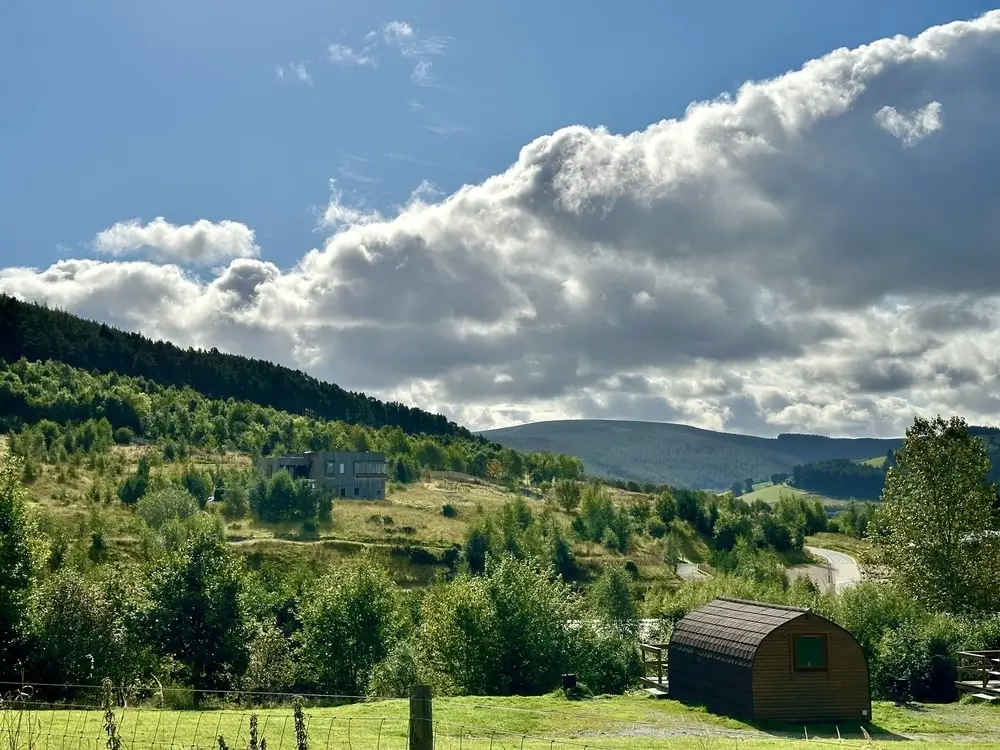
A view from Glentress Forest Lodges
Day 2 – Walkerburn to Glenkinnon
After a restful night at Glentress Forest Lodges, the team was eager to get back on the water for the second leg of their beginner-friendly canoe trip in Scotland. The journey for the day would take them from Walkerburn to Glenkinnon, offering a slightly more varied paddling experience with a mix of calm waters and gentle rapids.
A Scenic Start at Walkerburn
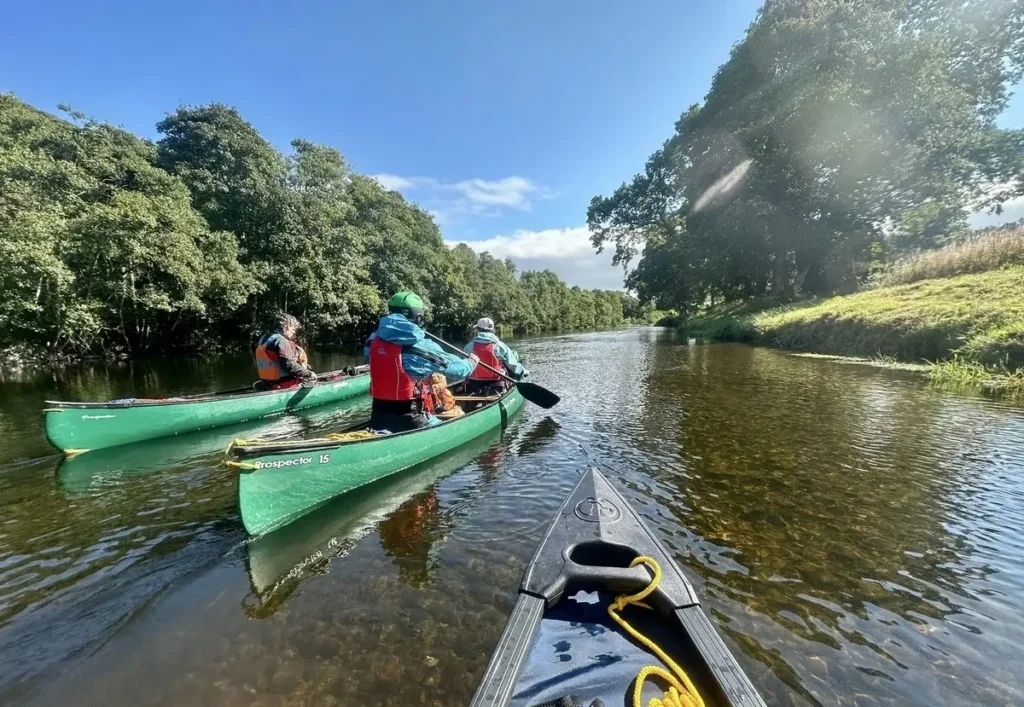
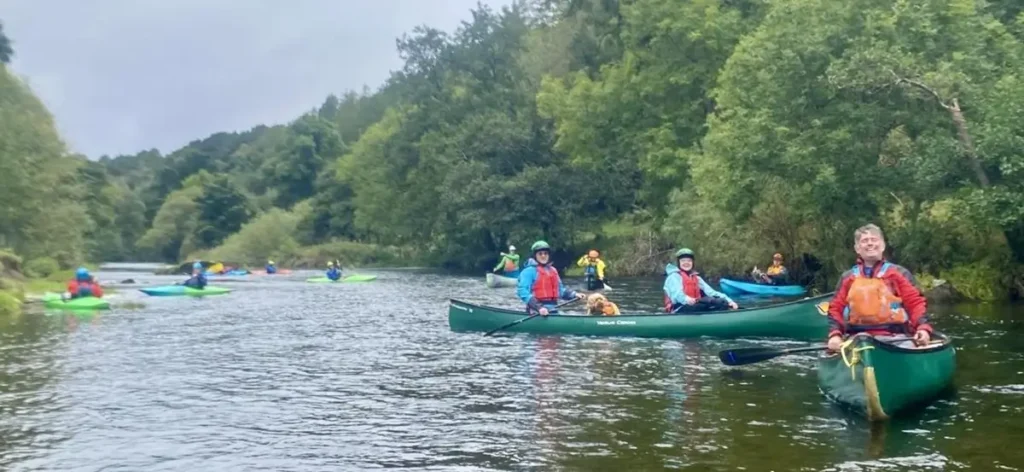
The get-in at Walkerburn was a fantastic place to warm up, as the flow of the river created small, playful waves, allowing paddlers to practice their control before setting off. This wasn’t extreme white water, but rather a fun way for newer paddlers to gain confidence in reading the river and handling moving water.
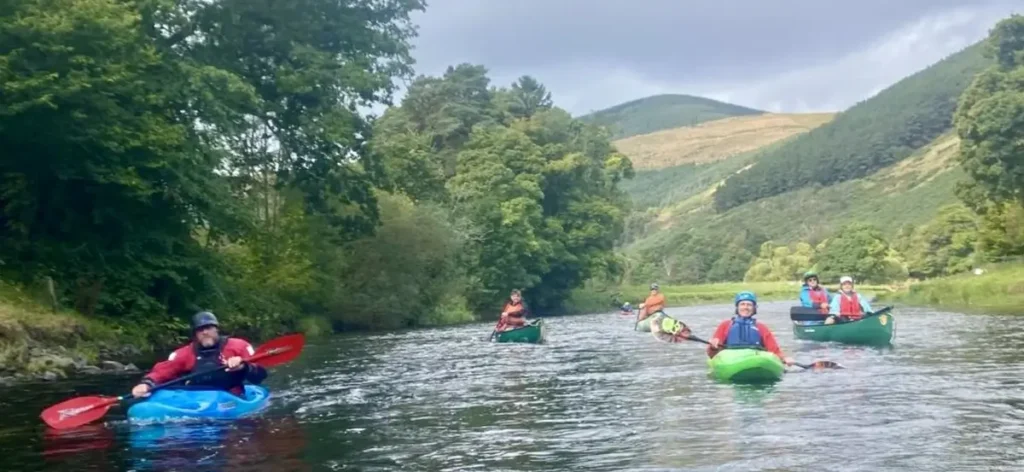
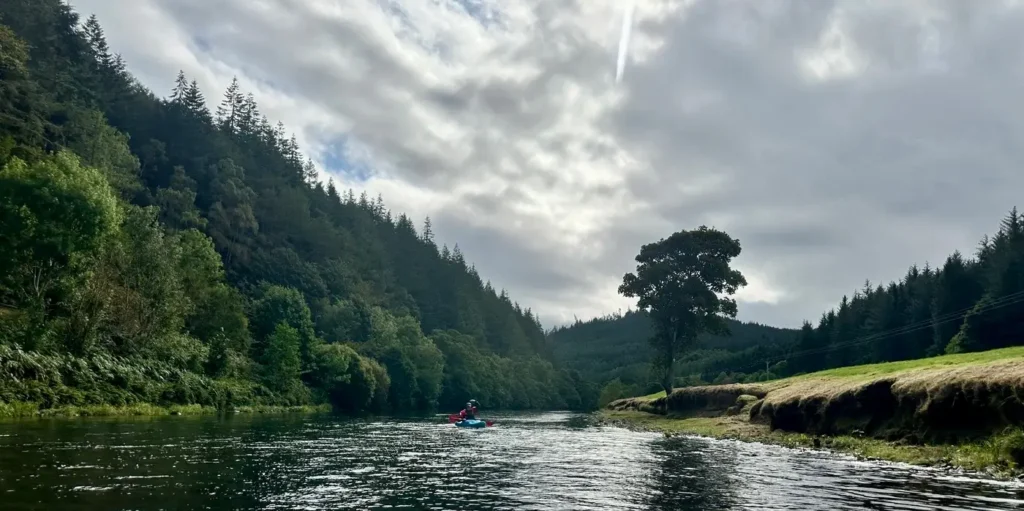
As the team paddled away from Walkerburn, they were surrounded by towering trees and dense forests, creating a serene, almost magical atmosphere. The river carved its way through the landscape, winding gently between Elibank and Thornielee Forests, where some of Scotland’s rarest wildlife can be found.
History and Legends Along the River
One of the highlights of the route was Elibank Castle, a 16th-century tower house with a fascinating history. The group paused to admire its ruins, perched on a ridge overlooking the river. Those familiar with Scottish folklore may know the legend of Muckle-Mouthed Meg, a tragic tale involving an arranged marriage and a desperate escape attempt.
Further downstream, the riverbanks opened up to reveal flower-filled meadows, a hotspot for butterflies such as the Small Copper and Northern Brown Argus. This peaceful, unspoiled section of the river made for an ideal spot to slow down and take in the natural beauty.
A Few Playful Rapids and the Final Stretch
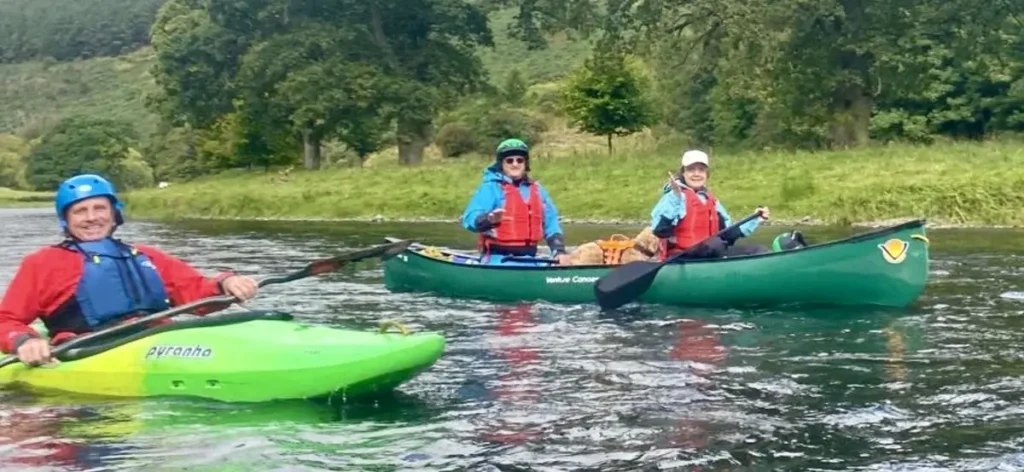
As the group continued, the water became slightly livelier in places, with small, gentle rapids adding some variety to the paddle. These were nowhere near extreme white water but provided a bit of excitement without being intimidating—ideal for those new to canoeing.
A clear sign that the journey was coming to an end was the graceful arch of Ashiestiel Bridge, a stunning landmark surrounded by scenic woodlands. Shortly after, the team reached Glenkinnon Community Woodland, their final landing point for the weekend.
As the boats were lifted from the water and gear was packed away, there was a shared feeling of satisfaction and accomplishment—a fantastic two-day River Tweed canoe trip enjoyed by all.
What Makes This a Beginner-Friendly Canoe Trip?
With so many paddling routes available in the UK, what makes the River Tweed canoe trip stand out as a beginner-friendly canoe trip in Scotland?
1. Gentle Flow with Just Enough Excitement
The sections paddled by Clitheroe Canoe Club were not extreme—there were no big white-water rapids or adrenaline-fuelled drops. Instead, the steady current provided a natural boost, helping beginners cover distance with less effort while allowing plenty of time to enjoy the scenery. The small rapids and weirs, such as the Peebles cauld, offered just enough challenge to build confidence without feeling overwhelming.

2. A Safe and Scenic Environment
Unlike fast-flowing rivers with hidden hazards, the Tweed Valley Canoe Trail is well-mapped, making it an ideal choice for those looking for a relaxed but engaging paddling experience. The wide, open sections mean there’s plenty of room for error, and the numerous stopping points along the way provide opportunities to rest, regroup, and take in the beautiful surroundings.
3. A Great Learning Opportunity
For beginners wanting to gain more experience in moving water, the River Tweed canoe trip provides the perfect conditions. With calm stretches for practice and gentle rapids to challenge new skills, paddlers can learn without pressure. Having an experienced leader like Tim Hogan guiding the way also ensured that everyone felt supported and safe.
4. An Accessible Adventure
Many of Scotland’s rivers are remote and require extensive planning, but the River Tweed is easily accessible from towns like Peebles, Walkerburn, and Innerleithen. With clear get-in and get-out points, nearby accommodation, and established canoe trails, it’s an easy trip for those new to multi-day paddling.
For anyone considering a beginner-friendly canoe trip in Scotland, the River Tweed is an excellent choice, offering scenic beauty, historical landmarks, and a safe paddling experience.
Other Paddlers on the River Tweed
One of the fantastic aspects of a River Tweed canoe trip is the opportunity to meet fellow paddlers along the way. The Tweed is a well-known waterway for canoeing, and while it is not heavily trafficked, we did come across a few other groups on the river.


Paddle Boarders at the Get-In – The Risks of SUP on the Tweed
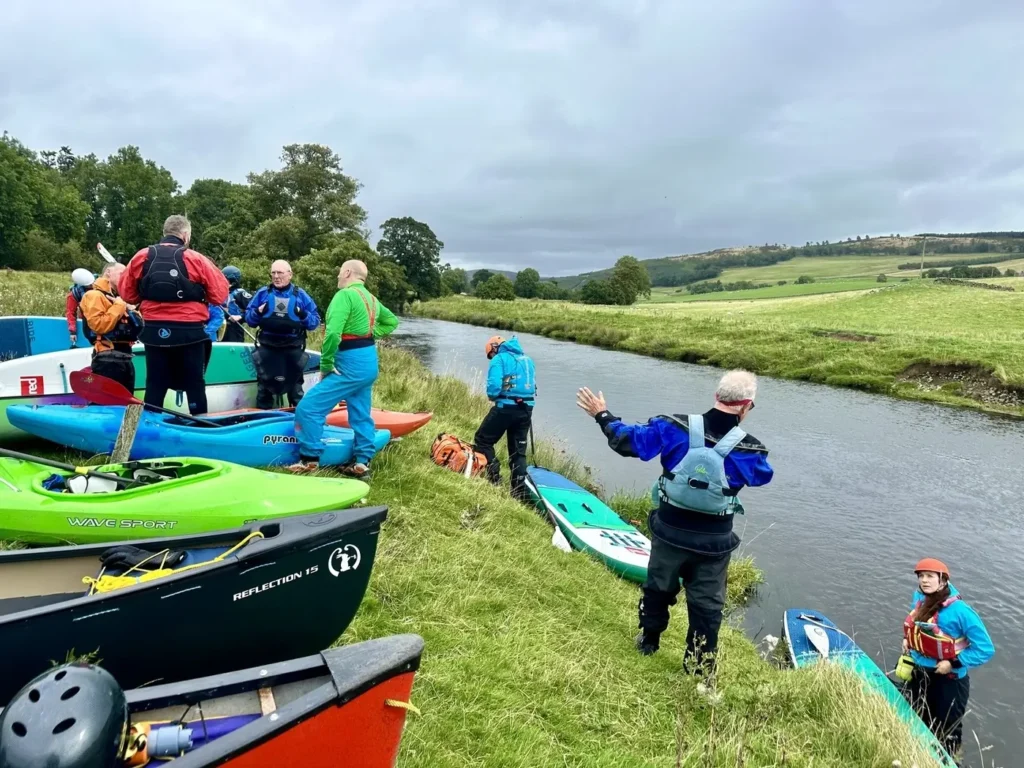
At our initial launch point in Stobo, we encountered a group of experienced stand-up paddle boarders (SUP) who were setting off ahead of us. They were fully equipped with dry suits and had paddled this route before, demonstrating a solid understanding of the river. However, it’s important to note that many sections of the River Tweed are far too shallow for safe paddle boarding.
The Clitheroe Canoe Club did not allow any paddle boarders on this trip for good reason. Falling from a paddle board onto shallow, rocky sections could result in serious injury, particularly if a skeg (the fin on a paddle board) clips a rock, causing an unexpected fall. While paddle boarding can be enjoyable on deeper, calmer sections, it is only recommended for experienced paddlers who are fully aware of the risks and able to choose their route wisely.
For those considering a beginner-friendly canoe trip in Scotland, a canoe or kayak is by far the safer and more suitable option for navigating the River Tweed.
Fellow Canoeists in Peebles – A Multi-Day Wild Camping Adventure
When we landed at Peebles at the end of Day 1, we met a small group of canoeists who were preparing for an extended journey all the way to Berwick-upon-Tweed, where the river meets the sea. Unlike our trip, which was based at Glentress Forest Lodges, these paddlers were camping along the riverbanks, enjoying a true wilderness experience.
They spoke about wild camping along the Tweed, highlighting the importance of leaving no trace—an essential principle for protecting the environment and respecting landowners. By setting up discreetly, avoiding damage to vegetation, and taking all rubbish with them, they ensured that their presence had no impact on the delicate ecosystem.
While Clitheroe Canoe Club opted for a more structured trip with accommodation, this conversation was a great reminder that the Tweed Valley Canoe Trail can be paddled in different ways, depending on what kind of adventure you’re looking for.
Join Us in 2025 for More Canoeing Adventures!
The River Tweed canoe trip was an incredible experience—offering a perfect mix of gentle paddling, stunning scenery, and just enough challenge for skill development. With the right preparation and choice of craft, it is an ideal option for those seeking a beginner-friendly canoe trip in Scotland.
Next year, Clitheroe Canoe Club will return for another adventure, exploring new sections of the Tweed. If you’ve ever wanted to try canoeing in a supportive, friendly club, why not join us?
Why Join Clitheroe Canoe Club?
✔ Welcoming atmosphere – Open to all skill levels, from beginners to experienced paddlers.
✔ Guided trips – Benefit from experienced trip leaders who ensure safety and fun.
✔ Varied adventures – From peaceful river journeys to coaching events and coastal kayaking.
✔ Skill development – A great way to learn and improve canoeing techniques.
Whether you’re a complete novice looking for a first-time canoe experience, or a paddler hoping to explore more of Scotland’s waterways, our 2025 River Tweed canoe trip will be a fantastic opportunity to get involved.
📍 Want to paddle with us? Get in touch with Clitheroe Canoe Club today!
This Beginner-Friendly Canoe Trip Scotland is designed to cater to those who are just starting their canoeing journey, ensuring a memorable experience on the water.