

Event Overview
On 11 January 2025, six members of Clitheroe Canoe Club gathered at Fell Foot, on the edge of Windermere, for an inspiring stand-up paddleboarding SUP coaching event. Led by renowned paddleboarding coach Chris Brain, the session was designed to help current coaches and instructors progress toward the Stand Up Paddleboard Sheltered Water Leader qualification.
The event was sponsored in part by Paddle UK, an organisation committed to supporting water sports through initiatives that build resilience and leadership. These bursaries provide clubs with the resources needed to train and develop their coaches, ensuring the safe growth of paddleboarding activities across the country.
For Clitheroe Canoe Club, the SUP coaching event represented an important investment in leadership skills for the club. By enhancing the skills and capabilities of its coaches, the club aims to ensure a wide range of safe and enjoyable activities for its members while fostering a strong community of paddlers.
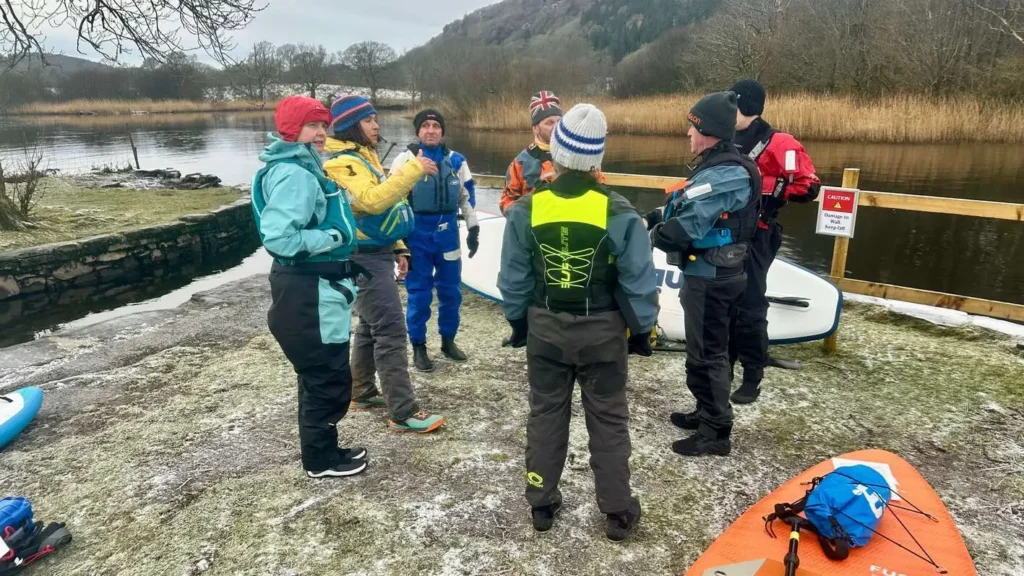
 Chris Brain briefing the group
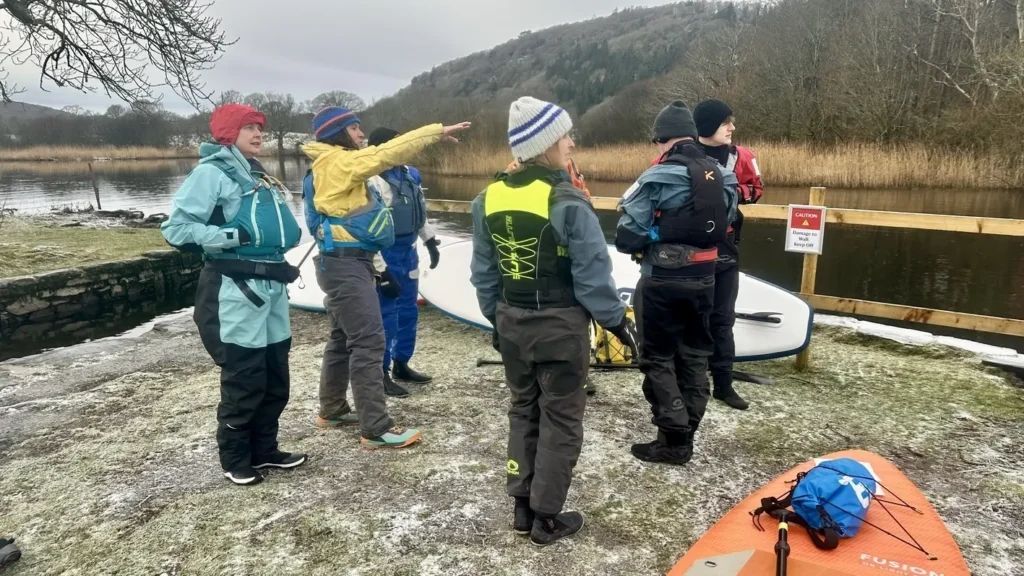
- Chris Brain discussing route options
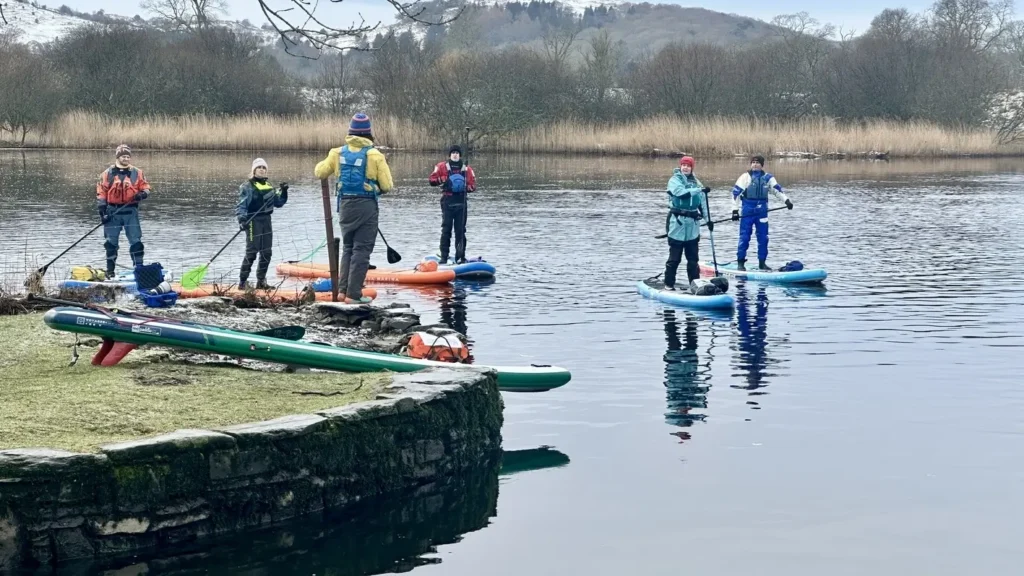
- Clitheroe Canoe Club Team with Chris Brain
- Arriving at Windermere
- Leader’s kit discussion with Chris Brain

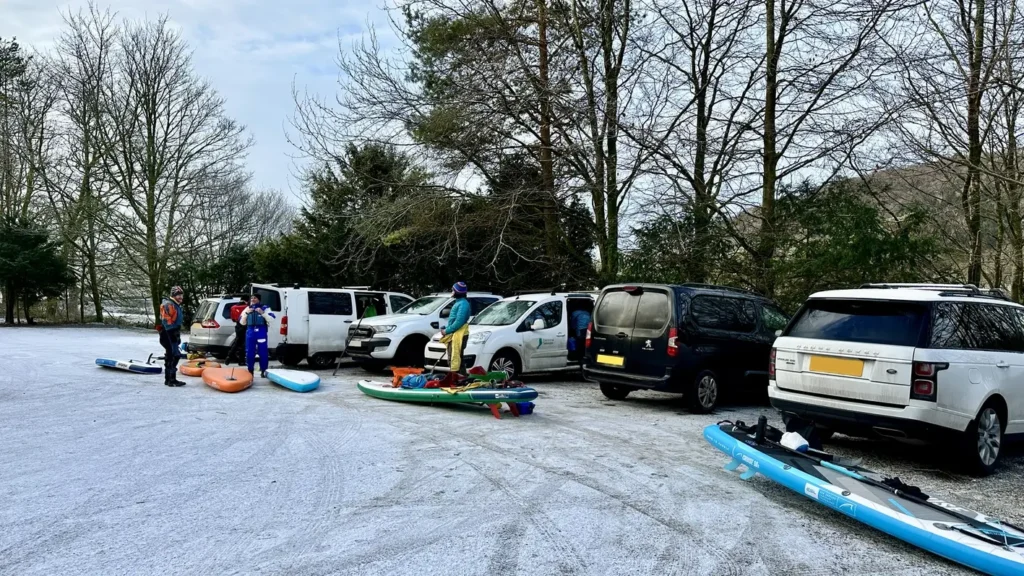

Planning the Journey: Decision-Making on the Water

Before launching onto Windermere, the group gathered to discuss the potential routes they could take for the day. Chris Brain highlighted three main options: paddling up the quieter right-hand side of the lake, exploring the busier left-hand side with businesses and boat activity, or venturing down the middle of the lake, which would involve more exposure to wind and greater distance from assistance.
After weighing the pros and cons of each option, the group decided on a combination route. They would start on the right side of the lake, enjoying the peace and chance to observe nature, before crossing to the left-hand side for variety and returning along that shoreline. This planning exercise was a critical part of the training during the SUP coaching event, as it emphasised the importance of collaborative decision-making and understanding group dynamics.
Chris explained how involving participants in planning ensures better cooperation and less frustration, particularly during real-life journeys. The exercise also taught the participants how to assess risks and adapt their plans based on the group’s skill level and environmental factors.
On the Water: Challenges and Skill Development
Once the plan was set, it was time to get on the water. The conditions were ideal: crisp air, brilliant sunshine, and calm waters. Fell Foot was unusually quiet due to the cold weather and time of year, allowing the group to focus entirely on their training without distractions.
The session began with a series of small challenges that helped Chris profile the skills and capabilities of each participant. Tasks included turning their boards 360 degrees in both directions, stepping forwards and backwards on the board, paddling to specific points, and moving between kneeling and standing positions. These challenges gradually increased in complexity, allowing the participants to build confidence while sharpening their technique. Ultimately, as SUP leaders of the future, the participants would be employing these techniques at the start of every journey.
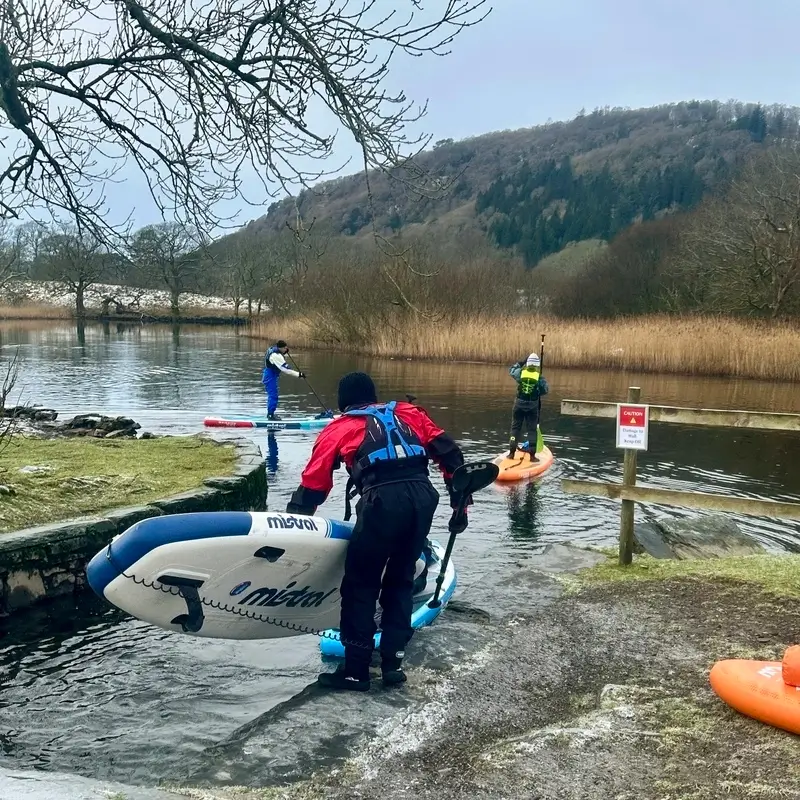

Chris emphasised that profiling participants is an essential part of leadership. Understanding the abilities and limitations of the group helps leaders make informed decisions and ensures that everyone stays safe and engaged. While it may delay the start of a journey in real-life scenarios, this preparation is critical for long-term success and group cooperation.
Midday Break: Rest and Reflection
After a productive morning, the group paused for lunch onshore. The break was not only an opportunity to rest and enjoy a hot drink but also a chance to reflect on the morning’s activities. Chris encouraged the participants to discuss their progress, share observations, and ask questions about the skills they were developing during the SUP coaching event.
The informal discussions provided valuable insights, with Chris sharing additional coaching tips tailored to each participant’s strengths and areas for improvement. The camaraderie among the group was evident, with everyone supporting and learning from one another. This collaborative spirit underscored the importance of teamwork in paddleboarding leadership.
Afternoon Paddling: Journey to Newby Bridge
Following the lunch break, the group launched from Fell Foot once again, this time heading downstream on the River Leven. This new route presented an opportunity to explore a slow-flowing section of the River that would keep the return journey upstream manageable.

As the group paddled towards The Swan Hotel & Spa at Newby Bridge, they passed under a road bridge where the water flow accelerated noticeably. This section required careful manoeuvring, with participants kneeling to maintain balance and stability. Once safely through, Chris gathered the group to discuss the hazards posed by weirs, one of which was located a short distance further downstream.
During the discussion, Chris explained how to identify potential dangers and evaluate whether it is safe to proceed. He highlighted past incidents, such as those involving paddleboarding groups that tragically lost lives due to inadequate planning and preparation. The Maritime Accident Investigation Branch (MAIB) found that one such group had failed to assess risks properly and lacked the necessary training and experience to lead novices in such environments.
The session served as a sobering reminder of the importance of staying within the remit of one’s qualifications as a leader. Leadership in paddleboarding is graded by the environment—ranging from very sheltered to white water—and this grading system exists to ensure that leaders operate in conditions they are fully equipped to manage.
Return Journey: Practising Emergency Responses
With the afternoon’s lessons on safety and hazards in mind, the group began the return journey upstream to Fell Foot. This part of theSUP coaching event was an ideal opportunity to practise emergency response techniques, which are essential skills for any SUP leader.
Participants worked in pairs to simulate towing a fatigued paddler, replicating a scenario where a group member may become too tired to continue. They also practised raft towing, a technique used when a paddler is injured or unconscious and requires constant support and monitoring.


The exercises weren’t just practical—they were also a source of laughter and camaraderie as the group learned how to manage challenging situations while maintaining a positive team dynamic. These drills reinforced the importance of preparation, teamwork, and clear communication in emergency scenarios, helping participants feel more confident in their abilities to lead under pressure.
Wrapping Up the Day
As the group returned to their starting point at Fell Foot, there was a sense of accomplishment among the participants. Chris wrapped up the day with a final debrief, encouraging everyone to reflect on their progress and the key lessons they had learned. Each participant shared their thoughts, with many expressing gratitude for the high-quality coaching and the opportunity to develop their leadership skills.
Tired but satisfied, the group packed up their gear and prepared for the journey home. The day had not only strengthened their technical abilities but also reinforced the values of safety, resilience, and teamwork—qualities that will serve them well as they work towards becoming certified SUP leaders.
Conclusion
The SUP coaching event at Fell Foot was a resounding success, combining skill development with crucial lessons in leadership and safety. Under the expert guidance of Chris Brain, participants were able to improve their technical abilities, understand the responsibilities of a leader, and learn how to navigate real-world challenges in stand-up paddleboarding.
Clitheroe Canoe Club’s commitment to investing in leadership training ensures that members will continue to benefit from well-organised and safe activities. With the support of Paddle UK’s bursaries, events like this not only enhance individual skills but also contribute to the overall resilience of the paddleboarding community.
By fostering capable and confident leaders, the club is paving the way for a thriving and inclusive paddling culture. The day at Windermere was a step forward for both the participants and the wider Clitheroe Canoe Club community. Read about a canoe coaching event Clitheroe Canoe Club hosted at the River Lune recently.
FAQs
1. What is the Stand Up Paddleboard Sheltered Water Leader qualification?
The Stand Up Paddleboard Sheltered Water Leader qualification certifies individuals to lead paddleboarding activities in sheltered water environments, ensuring they have the skills and knowledge to maintain safety and manage groups effectively. It is advisable to build skills by attending a SUP coaching event prior to assessment. This type of preparation comes in various guises and can be tailored to the needs of the individual.
The Stand Up Paddleboard Sheltered Water Leader qualification certifies individuals to lead paddleboard groups in sheltered water environments. This includes conditions such as wind up to a maximum of Force 3 (7-10 mph), areas within 200 metres of a safe landing, and slow-moving rivers or estuaries. As a qualified leader, you can work independently or be deployed by a club, centre, or organisation to lead trips and journeys safely and effectively.
2. Why is leadership training important in paddleboarding?
Leadership training is essential in paddleboarding to ensure the safety of all participants, especially in varied and potentially hazardous water environments. It equips leaders with the skills to assess risks, make decisions, and handle emergencies. A SUP coaching event is the ideal way to involve a group of club members in building such leadership skills.
3. How does Paddle UK support clubs like Clitheroe Canoe Club?
Paddle UK provides financial support through bursaries, helping clubs train coaches and leaders. This support strengthens the resilience of clubs by ensuring leaders are well-prepared to organise safe and enjoyable activities.
4. What did participants learn during the Fell Foot SUP coaching event?
Participants developed technical skills such as profiling participants, manoeuvring boards, towing, and hazard navigation. They also gained insights into leadership, group dynamics, and emergency response techniques along with learning about the essential kit a leader should carry and having an emergency plan in place prior to departure.
5. Are there more training events planned at Clitheroe Canoe Club?
Yes, Clitheroe Canoe Club is dedicated to ongoing leadership development. Future training events will focus on further enhancing skills and preparing members for advanced qualifications.